Ambrose A. Call State Park is the closest real stretch of woods to town, a 138-acre pocket of rugged hills and virgin timber tucked into the farmland on the south end of Algona. It’s named after one of the county’s first settlers, and it’s still one of the best places nearby for a short hike, a picnic, or a quiet weekend of camping without driving an hour or more to find real tree cover.
History · Trails · Camping · The Lodge · Nearby & Related · What to Bring
Quick FactsAddress: 2007 Call Park Dr, Algona, IA 50511
Location: Hwy 169 on the south end of Algona, then west on Call Park Drive
Size: 138 acres
Trails: about 2 miles, wooded and hilly
Campsites: 16 sites, $10 to $18 per night
History
The park’s name comes from Ambrose Call, who arrived in the area with his brother Asa on July 9, 1854, and built the first log cabin in Kossuth County near this exact spot. The brothers are said to have carved their names into a walnut tree here, the first recorded names in the county, a small but real piece of the area’s founding history. Ambrose and a traveling companion, William Smith, began building the cabin the day after they arrived, while Asa went back for his wife and supplies, a detail that gives some sense of just how remote and undeveloped this stretch of Iowa was at the time.
Decades later, in the mid-1920s, Ambrose’s daughter Florence Call Cowles helped secure the land her father once owned for use as a public park. She donated $3,000 toward the purchase, a significant sum at the time, matched by contributions from the Algona Community Club and the State Conservation Board along with other local donations. The park was formally dedicated in 1929, turning a piece of family history into public land that’s stayed open to the community for nearly a century since.
Trails
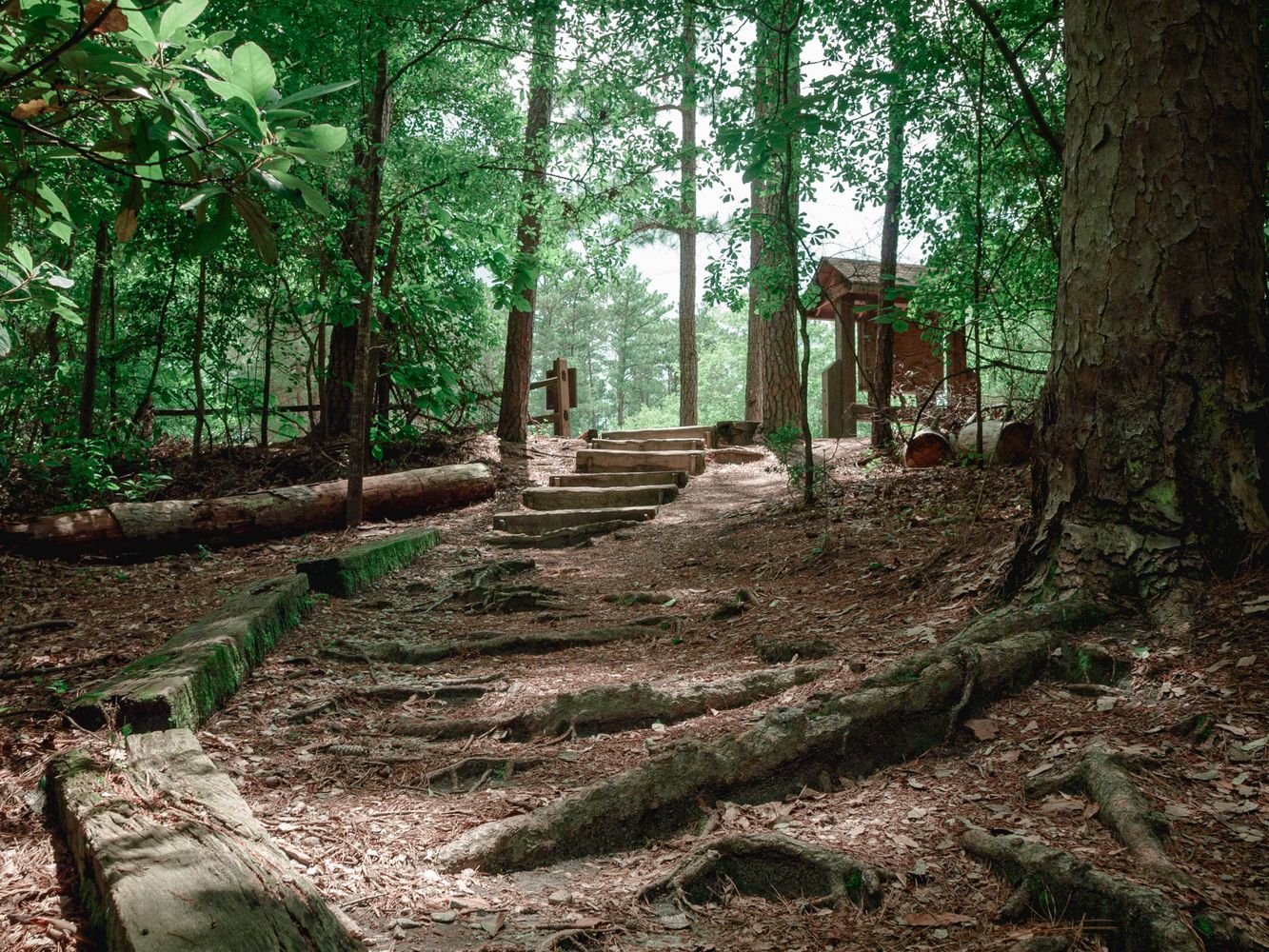
The park’s roughly two miles of trail cut through dense forest, down into a ravine, and along a winding creek. It’s a hillier, more rugged walk than the flat farmland surrounding it, which makes it feel like a bigger escape than its size suggests, especially if you’re used to the mostly level terrain that dominates this part of Iowa. Bikes aren’t allowed on the hiking trails, so it tends to stay quiet and walkable even on a nice weekend when the campground is busier.
Camping
The campground has 16 sites with 30 and 50 amp electric hookups, plus water and sewer hookups at some sites, running $10 to $18 a night depending on what you need. There’s no shower building or modern restroom on site, just a pit toilet, so it’s more of a rustic camping experience than a full-service campground with hot showers and a camp store. For anyone used to bigger, more developed state park campgrounds, that’s worth knowing ahead of time so you can pack accordingly.
The Lodge
A log-cabin-style lodge built in 1928 sits at the center of the park and is still used today for family reunions and group gatherings. It’s one of the park’s more distinctive features, built not long after the land was first dedicated as a park, and it gives the place a sense of permanence that a lot of newer state parks don’t have. Worth checking out even if you’re just there for the day rather than staying overnight.
Nearby & Related
If you’re heading into town after a day at the park, Hy-Vee sits at the intersection of Highway 169 and Highway 18, making it an easy stop to restock groceries or grab dinner on your way back in.
What to Bring
Good to KnowSince there’s no modern restroom or shower, pack drinking water, bug spray, and anything else you’d want for a rustic stay rather than a full-service campground. It’s an easy trip if you live nearby and just want a change of scenery for an afternoon or a weekend.
Fishing and Wildlife
The park sits near the east fork of the Des Moines River, and while it’s better known for hiking and camping than fishing, the surrounding waterways are part of what drew early settlers like the Call brothers to this spot in the first place. Deer, wild turkey, and a range of woodland birds are common sights along the trails, especially early in the morning or right before dusk.
For New Renters
If you’re new to Algona and used to needing a long drive to reach real hiking trails, it’s worth knowing you don’t have to leave town for it here. The park is close enough to be a regular after-work option rather than something you need to plan a whole day around.
Looking for a place to call home near everything Algona has to offer? See our available apartments or start your rental application today.